Wednesday, December 6, 2006

Sabbath


Why Do Seventh Day Baptists Observe the Sabbath?
by Dr. Paul Manuel

Seventh Day Baptists keep a day for worship different from that of most other Christians. Instead of gathering on the first day of the week, Seventh Day Baptists meet on the seventh day of the week, the biblical Sabbath. Why would they choose to separate themselves in this way? What scriptural reasons are there for worshipping and resting on the seventh day rather than on the first day? Seventh Day Baptists keep the Sabbath because…

1. They note God's example, for He observed it at creation.
By the seventh day God completed His work which He had done, and He rested on the seventh day from all His work which He had done. (Gen 2:2)

For in six days the Lord made the heavens and the earth…and rested on the seventh day; therefore the Lord blessed the sabbath day and made it holy. (Exod 20:11)
2. They recall God's deliverance, for He instituted it after the exodus.
See, the Lord has given you the sabbath; therefore He gives you bread for two days on the sixth day. Remain every man in his place; let no man go out of his place on the seventh day. (Exod 16:29)

You shall remember that you were a slave in the land of Egypt, and the Lord your God brought you out of there by a mighty hand and by an outstretched arm; therefore the Lord your God commanded you to observe the sabbath day. (Deut 5:15)
3. They obey God's precept, for He commanded it on Sinai.
Remember the sabbath day, to keep it holy. (Exod 20:8)

Observe the sabbath day to keep it holy, as the Lord your God commanded you. (Deut 5:12)
4. They recognize God's designation, for He appointed it for worship.
For six days work may be done, but on the seventh day there is a sabbath of complete rest, a holy convocation. (Lev 23:3a)
5. They accept God's invitation, for He opened it to gentiles.
Also the foreigners who join themselves to the Lord…every one who keeps from profaning the Sabbath…I will bring to My holy mountain and make them joyful in My house of prayer….for My house will be called a house of prayer for all the peoples. (Isa 56:6-7)
6. They join God's people, for He gave it to Israel.
…speak to the sons of Israel, saying, “You shall surely observe My sabbaths; for [this] is a sign between Me and you throughout your generations, that you may know that I am the Lord who sanctifies you.” (Exod 31:13)

…you, being a wild olive, were grafted in among them and became partaker with them of the rich root of the olive tree (Rom 11:17)
7. They seek God's approval, for He linked it to reward.
If because of the sabbath, you turn your foot from doing your [own] pleasure on My holy day, and call the sabbath a delight, the holy [day] of the Lord honorable, and honor it, desisting from your [own] ways, from seeking your [own] pleasure and speaking [your own] word, then you will take delight in the Lord, and I will make you ride on the heights of the earth; and I will feed you [with] the heritage of Jacob your father, for the mouth of the Lord has spoken. (Isa 58:13-14)

How blessed is the man…who keeps from profaning the Sabbath…. (Isa 56:2)
8. They anticipate God's kingdom, for He demands it in tribute.
“And it shall be from new moon to new moon and from sabbath to sabbath, all mankind will come to bow down before Me,” says the Lord. (Isa 66:23)
9. They follow God's son, for he kept it on earth and expected it from disciples.
…as was his custom, he entered the synagogue on the Sabbath…. (Luke 4:16)

Whoever then annuls one of the least of these commandments, and teaches others [to do] the same, shall be called least in the kingdom of heaven; but whoever keeps and teaches [them], he shall be called great in the kingdom of heaven. (Matt 5:19)

…teaching them to observe all that I commanded you…. (Matt 28:20a)
10. They copy God’s church, for early believers, Jews and gentiles, continued to keep it.
It is my judgment, therefore, that we should not make it difficult for the Gentiles who are turning to God…. For Moses has been preached in every city from the earliest times and is read in the synagogues on every Sabbath. (Acts 15:19, 21)
11. They await God’s heaven, for it is the ultimate release from their labor.
So there remains a Sabbath rest for the people of God. (Heb 4:9)
Seventh Day Baptists do not keep Sunday because there is no biblical evidence that God changed His appointed day or that the earliest believers observed another day. In fact, there are only three New Testament references to Sunday, none of which gives that day priority over the Sabbath.

• Jesus rose on the first day, but only after he rested in the tomb on the seventh day.
But on the first day of the week, at early dawn, they came to the tomb bringing the spices which they had prepared. (Luke 24:1; cf. v v. 13, 21, 46)
• Paul preached on the first day, but it was a final (not a regular) meeting before he left the area.
On the first day of the week, when we were gathered together to break bread, Paul [began] talking to them, intending to leave the next day, and he prolonged his message until midnight. (Acts 20:7)
• Corinthians set aside money on the first day, but it was a private savings not a public collection.
On the first day of every week each one of you is to put aside and save, as he may prosper, so that no collections be made when I come. (1 Cor 16:2)
The shift from Sabbath to Sunday followed an influx of gentile converts that changed the demographic makeup of the church, leaving Jewish believers a marginalized minority. Because the law did not have the same status among non-Jews as it did among Jews, there was less concern for keeping it. Sunday, the day of Jesus’ resurrection, became the preferred day of worship, a practice the Emperor Constantine promoted in the 4th century and subsequent church councils prescribed.

Although some Jewish believers (those who managed to avoid assimilation) continued to keep the Sabbath, gentile Christians generally did not. Seventh Day Baptists arose in the mid-17th century with a renewed recognition of the Sabbath’s importance.

The primary difference between the two days is that Sabbath observance is based on biblical teaching, whereas Sunday observance is based on church tradition.

"How blessed is the man… who keeps from profaning the sabbath."

Rev. Paul Manuel is a member of the Madison Seventh Day Baptist Church and pastor of the German Seventh-Day Baptist Church in Salemville, PA. His Ph.D. is in Hebrew and Semitic Studies from the University of Wisconsin-Madison.

Born again

From Christian Quotation of the Day for December 6, 2006:

He that is alive may know that he was born, though he know neither the place where nor the time when he was so; and so may he that is spiritually alive, and hath ground of evidence that he is so, that he was born again, though he know neither when, nor where, nor how. And this case is usual in persons of quiet natural tempers, who have had the advantage of education under means of light and grace. God ofttimes, in such persons, begins and carries on the work of his grace insensibly, so that they come to good growth and maturity before they know that they are alive.
John Owen [1616-1683]

Tuesday, December 5, 2006

The New Atheism?

Albert Mohler's website is a very good guide to the issues at the interface of the Christian faith and secular society. He reads and he interviews those about whom he offers commentary. Today he reviews the cover article from the November issue of WIRED magazine about the "New Atheists."

The new atheism doesn't have anything to say that is different from age-old atheism but it is much more assertive: Christians are benighted, probably stupid, and what they believe is evil; allowing them to teach it to their children amounts to child abuse. The review is very good and the original article is also available online and worth reading. Excerpts from Mohler's commentary on the article:
2006 has been a big year for atheism. The release of several major books - all widely touted in the media - has put atheism on the front lines of current cultural conversation. Books such as Richard Dawkins' The God Delusion, Daniel Dennett's Breaking the Spell: Religion as a Natural Phenomenon, and Sam Harris' Letter to a Christian Nation are selling by the thousands and prompting hours of conversation on college campuses and in the media.

....WIRED contributing editor Gary Wolf explains that this newly assertive form of atheism declares a very simple message: "No heaven. No hell. Just science....

At the beginning of his article, he gets right to the point: "The New Atheists will not let us off the hook simply because we are not doctrinaire believers. They condemn not just belief in God but respect for belief in God. Religion is not only wrong; it's evil. Now that the battle has been joined, there's no excuse for shirking." ....

For a man who is supposedly an exemplar of the humble discipline of science, Dawkins is capable of breathtaking condescension. Consider these words: "Highly intelligent people are mostly atheists .... Not a single member of either house of Congress admits to being an atheist. It just doesn't add up. Either they're stupid, or they're lying. And have they got a motive for lying? Of course they've got a motive! Everyone knows that an atheist can't get elected."

Note his argument carefully - highly intelligent people are most likely to be atheists.

The political dimensions of Dawkins' thought become immediately apparent when he speaks of how children should be protected from parents who believe in God. "How much do we regard children as being the property of their parents?," Dawkins asks. "It's one thing to say people should be free to believe whatever they like, but should they be free to impose their beliefs on their children? Is there something to be said for society to be stepping in? What about bringing up children to believe manifest falsehoods?" ....

Sam Harris is even more apocalyptic than Richard Dawkins or Daniel Dennett. He argues that, unless belief in God is eradicated, civilization is likely to end in a murderous sea of religious warfare. As an alternative, Harris proposes a "religion of reason."....

In his wide-ranging article, Wolf considers the emergence of the New Atheism from multiple perspectives. He deals not only with Dawkins, Harris, and Dennett, but with a host of others, including some who believe in God. He understands that the New Atheists stand in contrast with the older atheism more in terms of mood and mode of public engagement. He also understands that those who attempt to rebut the New Atheism on scientific grounds can find themselves facing considerable complexity. As Wolf explains, when defenders of faith accept science as the arbiter of reality, atheists are left "with the upper hand." .... [the whole review]

Source: AlbertMohler.com: The New Atheism?

Monday, December 4, 2006

Musicians, worship and theology

At a site called worshipmatters.com, a series of posts by Bob Kauflin about worship leaders, music and theology. The series is called "On Musicians and Reading Books." The most recent Sabbath Recorder contained several articles about music. This, from another musician and worship leader, contributes an additional perspective:
I've had worship leaders tell me they're not that interested in theology because it only causes divisions. They just want to help people worship Jesus. But how can we help others worship Jesus without a clear, compelling picture of who He is and what He's done? How can we worship a God we don't know? And how can we know Him without learning about Him? That's theology!

Theology is simply the study of God. That's why every Christian, musician or otherwise, is a theologian. The question is whether we're a good theologian or a bad one. We're a good theologian if what we say and think about God lines up with the whole of Scripture. We're a bad theologian if our view of God is vague, unbiblical, distorted, or simply reflects our own opinions.

Some musicians claim that music speaks to them more clearly about God than words do. That's why they spend more time working on their music than reading the Bible or books that help them understand the Bible. They insist that words restrict, box in, and limit, while music expands the mind, softens the heart, and opens us up to new ways of powerfully experiencing God.

We can appreciate the impulse to have a "living faith," but that conclusion is terribly misguided. While music affects us in many ways, it can never communicate by itself the meaning of God's self-existence, Christ's substitutionary atonement, or the nature of the Trinity. Nor can music explain what role music is supposed to play in worshipping God. For that, we need to read our Bibles. And to know what the Bible says, we need theology. Good theology.
The entire series of posts would probably be interesting to anyone concerned about the quality of our worship.

In another place Kauflin makes this comment:
Worship is about gladly giving God the glory he alone deserves and is worthy of. God is the only being in the universe whose glory is intrinsic. All other glory is derived and second-hand. God is absolutely committed to his glory above all else, especially through those his Son has redeemed.
Source: On Musicians and Reading Books

Lectionary available online in the ESV

The English Standard Version is available online in a variety of forms. I know some of you enjoy using the Lectionary as a way of reading through Scripture. The links here provide various ways of receiving the daily readings. This link is to the webpage that provides the readings each day or you could simply use the link I provide in the right column on this page. The Lectionary used is from the Episcopal/Anglican Book of Common Prayer.

Source: Daily Office Lectionary from the Book of Common Prayer Available Online in the ESV

"War on the Weak"

Charles Colson and Anne Morse write in Christianity Today about the renewed respectability of eugenics in our society. Eugenics originated with racists and "progressives," reached its nadir with the Nazis, and is now back. Always justified with humanitarian euphemisms, it comes down to killing people for "their own good" or for the "good of society." Selections from the column:
In brightly lit hospital operating rooms, crowded nursing homes, busy research labs, and doctors' offices, an unannounced, lethal war is being waged against the weakest of the weak: handicapped infants, the elderly, and humans at the embryonic stage of life.

The opening shot in this war was fired when the modern eugenics movement came into fashion some 80 years ago. The first targets were the "feebleminded" and people of the "wrong" race. Leading scientists in the early decades of the 20th century, enamored with Darwin's theories, became eugenics advocates. Historian Richard Weikart, in From Darwin to Hitler: Evolutionary Ethics, Eugenics, and Racism in Germany, writes that while Darwin wasn't the first to argue that the strong and healthy have higher value than the weak and sick, or that some races are inferior, he provided a scientific foundation for those beliefs....

Even the U.S. Supreme Court weighed in. Among the most enthusiastic proponents of forced sterilization was Supreme Court Justice Oliver Wendell Holmes, who wrote in Buck v. Bell (1927) that "it is better for all the world" if "society can prevent those who are manifestly unfit from continuing their kind. ... Three generations of imbeciles are enough." ...

This pseudo-science was all the rage in Vienna and Munich, where a young Adolf Hitler proposed his radical ideas for the "master race." ....

Seventy years later, eugenic ideas are surfacing again, masquerading as humanitarian progress - as in research labs where scientists destroy "leftover" human embryos to find cures for diseases, or in sperm banks where women select their baby's father from hundreds of donors on the basis of intelligence or gifts, or in doctors' offices where parents feel subtle pressure to abort imperfect fetuses, or in hospitals when futile-care policies allow doctors to decide who lives and who dies. Today, some ethicists, like Princeton's Peter Singer, brazenly argue that it's permissible to kill disabled children after they're born - children like my autistic grandson, Max - all in the seductive guise of maximizing human happiness. ...

Eugenics, once discredited, has made a lethal comeback. As we celebrate the Incarnation this month, we are reminded that every life at every stage is precious in God's design. ...
Source: War on the Weak Christianity Today

Friday, December 1, 2006

Atheism is the real force behind the mass murders of history

Dinesh D'Souza in the Christian Science Monitor refutes the argument [frequently made these days] that religion has caused most of the evil in history:
It's time to abandon the mindlessly repeated mantra that religious belief has been the greatest source of human conflict and violence. Atheism, not religion, is the real force behind the mass murders of history.
Earlier, he writes
Religious fanatics have done things that are impossible to defend, and some of them, mostly in the Muslim world, are still performing horrors in the name of their creed. But if religion sometimes disposes people to self-righteousness and absolutism, it also provides a moral code that condemns the slaughter of innocents. In particular, the moral teachings of Jesus provide no support for - indeed they stand as a stern rebuke to - the historical injustices perpetrated in the name of Christianity. [read the rest]

Source: Atheism, not religion, is the real force behind the mass murders of history csmonitor.com

In the 20th century the selected governments below, within their own countries, quite apart from war, killed their own subjects as indicated:
USSR between 1917 and 1987 - 61,911,000
People’s Republic of China between 1949 and 1987 - 35,326,000
Nazi Germany between 1933 and 1945 - 20,946,000
Nationalist China between 1928 and 1949 - 10,075,000

169 million in total were killed by the government ruling them in the last century. 37.4 million more were killed in wars - some started by these regimes, almost none motivated by religious doctrine.
None of these governments were motivated by religion. The USSR and Red China were explicitly anti-religious, the Nazis were enemies of Christianity and Judaism, and the Nationalists were engaged in a political effort to unify China. Their murders dwarf anything perpetrated in earlier centuries.
statistics are taken from R.J. Rummel, Death By Government,
Transaction Publishers, New Brunswick & London, 1994, pp. 1-27.

Throwing out the baby with the bathwater

As a one-time high school teacher who knew many students raised in Christian homes, possessed of the normal adolescent hyper-awareness of adult inconsistency, and in the process of deciding whether the faith of their parents should become their own, this seems right:
"...when it is discovered, as it frequently is when those imposed upon "come of age," that God does not require what his representatives said he did, it casts heavy doubt upon the evangelical verities they have also taught. If the faithful have in fact been lied to about one thing, how can they be confident that the whole mass of Christian teaching received from their teachers wasn't a fabrication of clericalism and prudential mendacity? If - to extract some blunt examples - it is discovered that God does not actually require (that is, the Bible does not in fact teach) teetotalism, or forbid dancing, or may not regard you with diminished satisfaction if you eat meat on Friday, then why should we think he is as firmly interested in modesty or temperance or the necessity of believing in Christ's resurrection? Or that he exists? When we kick over the traces that deserve the kicking, we find that others attached to them also tremble.

The book I was reading tells of a pastor who, upon being forced by his conscience to confront and admit to himself a number of the errors of his sect, thought himself not only obliged to leave its pastorate - which would have been honest and perhaps inevitable - but had his faith shaken to the core by the discovery.
Source: Touchstone Magazine - Mere Comments

Also read: Paul Manuel: Assessing the strength of your convictions

"The Credibility Question"

In his column today, Albert Mohler responds to an article in USA Today:

Is Christianity in America losing its credibility? Oliver "Buzz" Thomas obviously thinks so. In his view, Christianity is losing credibility because so many Christians believe that homosexuality is a sin.
After responding to the substance of Mr Thomas's arguments, Mohler goes on to note:
Readers familiar with the recent history of the Southern Baptist Convention will recognize that Buzz Thomas was for many years counsel and staff member of the Baptist Joint Committee on Public Affairs (now known as the Baptist Joint Committee for Religious Liberty), a group defunded over a decade ago by the Southern Baptist Convention, which formally disassociated itself from the BJCPA. Anyone wondering why the conservative resurgence in the Southern Baptist Convention was necessary should find ample evidence in Buzz Thomas's article.
Source: The Credibility Question

The Seventh Day Baptist General Conference is still a member of the BJC.

Thursday, November 30, 2006

Christians and divorce

Reported at Christianity Today:

"...[E]vangelical women tend to be happier in their marriages than other women, particularly when both the wife and the husband attend church on a regular basis. This idea that Christians are just as likely to divorce as secular folks is not correct if we factor church attendance into our thinking. Churchgoing evangelical Protestants, churchgoing Catholics, and churchgoing mainline Protestants are all significantly less likely to divorce.

How much less likely? I estimate between 35 and 50 percent less likely than Americans who attend church just nominally, just once or twice a year, or who don't attend church at all. It is true that people who say they've had a born-again experience are about as likely to divorce as people who are completely secular. But if you look at this through the lens of church attendance, you see a very different story...."

Source: Christianity Today: What Married Women Want

Wednesday, November 29, 2006

"To free all those who trust in Him..."

Although decorations have been on sale and carols have been playing in the stores for weeks already, we are only now entering the Advent season. Wilfred McClay, at Touchstone Magazine, reminds us that the Christmas lesson is of Light piercing darkness, and if we forget the darkness, we forget the significance of the event.
"...Our Christmas carols are among the most precious shared possessions of our fragmenting, fraying culture, and for all that we abuse them and demean them, they seem to remain imperishable.

This year, somehow it's been God Rest Ye Merry, Gentlemen that has stuck in my brain, and particularly these words, in the first verse: 'To save us all from Satan's power/ When we were gone astray.' We move through these sibilant words so quickly and rhythmically. I know I always have. And yet how plainly those few words sketch in a somber background, a whole universe of presuppositions without which the song has a very different, and diminished, meaning....

We are constantly reminded to 'keep Christ in Christmas' and to remember 'the reason for the season.' And of course we should. But, if I may be permitted to put it this way, we must also keep Satan in Christmas, and not skip too lightly over the lyrics that mention him.

For he and the forces he embodies are an integral part of the story. It utterly transforms the way we understand Christmas, and our world, when we also hold in our minds a keen awareness of the darkness into which Christ came, and still must come, for our sake. Later in God Rest Ye Merry, Gentlemen the visiting angel tells the shepherds in the field that Christ has come 'To free all those who trust in him/ From Satan's power and might.'

....[T]he 'comfort and joy' of which the song speaks are not merely outbursts of seasonal jollity.

They bespeak the ecstatic gratitude of captives and cripples who recognize that, in and through Christ, the entire cosmos has been transformed, and their lives have been made new. Nothing can ever be the same again...."
Source: Touchstone Archives: God Rest Ye Merry

God rest ye merry, gentlemen, let nothing you dismay,
Remember Christ our Savior was born on Christmas Day;
To save us all from Satan’s power when we were gone astray.

Refrain
O tidings of comfort and joy, comfort and joy;
O tidings of comfort and joy.

“Fear not, then,” said the angel, “Let nothing you afright
This day is born a Savior of a pure Virgin bright,
To free all those who trust in Him from Satan’s power and might.”

Refrain
O tidings of comfort and joy, comfort and joy;
O tidings of comfort and joy.

Science as religion

At a recent conference:
"...According to the New York Times, the controlling idea was that "science needs to take on an evangelical role, vying with religion as teller of the greatest story ever told."

The atheistic and agnostic scientists in attendance were more open and aggressive than ever. ...Richard Dawkins, Oxford professor and author of the subtly titled The God Delusion, declared: 'I am utterly fed up with the respect that we - all of us, including the secular among us - are brainwashed into bestowing on religion.' Steven Weinberg, Nobel Laureate and member of the prestigious University of Texas physics department, instructed: 'Anything that we scientists can do to weaken the hold of religion should be done and may in the end be our greatest contribution to civilization.' Another scientist said: 'Let's teach our children from a very young age about the story of the universe and its incredible richness and beauty. It is already so much more glorious and awesome - even comforting - than anything offered by any scripture or God concept I know.'

Neil deGrasse Tyson, director of New York City's Hayden Planetarium, fretted that "God on the brain" would stand in the way of the love of discovery, and displayed pictures of deformed newborns in order 'to disabuse the audience of any idea that an intelligent, loving creator could be behind our existence,' ... The beautiful rings of Saturn were offered by another scientist in implicit contrast to the unfortunate newborns. But the nature that these scientists worship caused both these things, so why should we admire their godless universe anymore than the one with God? Wouldn't you know it, the old problem of evil gets in their way too, only they don't seem to realize it.

I take that back. Weinberg does, and has famously pronounced: 'It is hard to realize that this all [i.e., life on Earth] is just a tiny part of an overwhelmingly hostile universe. It is even harder to realize that this present universe has evolved from an unspeakably unfamiliar early condition, and faces a future extinction of endless cold or intolerable heat. The more the universe seems comprehensible, the more it also seems pointless.' In what grade shall we teach children that part of the 'religion'?

So, scientists want to make science into God in order to satisfy man's need for the transcendent that he now foolishly finds in religion...."

Source: Phi Beta Cons on National Review Online

Apologetics

Via Between Two Worlds:

Free online lectures on apologetics by Douglas Groothuis, professor of philosophy at Denver Seminary.

Source: Between Two Worlds

Who really cares

From The Chronicle of Philanthropy (via Arts and Letters), a report on who actually gives to those in need - it isn't necessarily those who talk most loudly about injustice:
In "Charity's Political Divide" Who Really Cares revealed that religion played a far more significant role in giving than he had previously believed. In 2000, religious people gave about three and a half times as much as secular people - $2,210 versus $642. And even when religious giving is excluded from the numbers, Mr. Brooks found, religious people still give $88 more per year to nonreligious charities.

He writes that religious people are more likely than the nonreligious to volunteer for secular charitable activities, give blood, and return money when they are accidentally given too much change. "There is not one measurably significant way I have ever found in which religious people are not more charitable than nonreligious people," Mr. Brooks says. "The fact is, if it weren't for religious people in your community, the PTA would shut down."

Byron R. Johnson, a sociology professor and co-director of the Institute for Studies of Religion at Baylor University, says he recently gathered data that show similar results - such as high levels of civic engagement among religious people - while assembling a report on faith in America that was released in September.

"It was not surprising to me that the lil ol' farmer in South Dakota outgave people in San Francisco," Mr. Johnson says. "But I think to the everyday citizen, this might strike them as counterintuitive."

Mr. Brooks ... writes that households headed by a conservative give roughly 30 percent more to charity each year than households headed by a liberal, despite the fact that the liberal families on average earn slightly more.

Most of the difference in giving among conservatives and liberals gets back to religion. Religious liberals give nearly as much as religious conservatives, Mr. Brooks found. And secular conservatives are even less generous than secular liberals.

At the outset of his research, Mr. Brooks had assumed that those who favor a large role for government would be most likely to give to charity. But in fact, the opposite is true.

..."In essence, for many Americans, political opinions are a substitute for personal checks," Mr. Brooks writes.

Mr. Brooks says the data show that religious people, on average, give 54 percent more per year than secular people to human-welfare charities. Some of those charities may be religiously affiliated, but their work is focused on charity and not religion, he says.

In his book, Mr. Brooks examines giving among the poor. When looking at households with equivalent income, the working poor give three times as much as welfare recipients.

... Near the end of the book, Mr. Brooks lays out the case that philanthropy is as good for the donor as for the receiver, citing data showing that giving makes one happier and healthier....

Source: The Chronicle, 11/23/2006: Charity's Political Divide

Tuesday, November 28, 2006

The suicide of a believer

Via Intellectuelle and InternetMonk I found a sermon delivered on the occasion of the funeral of a Christian who committed suicide. The entire funeral message is at byFaith Online. The "theological virtues" are faith, hope and love. Suicide has always been considered a manifestation of the opposite of hope - despair - hopelessness - inability to trust in God. In some traditions a suicide cannot be buried in consecrated ground. This passage comes toward the end of the message. The entire sermon is well worth reading.
Listen to me, what Petros did was wrong. But what he did for the last twenty-five years did not get him into the kingdom of God, and what he did almost two weeks ago will not take him from the kingdom of God. The kingdom of God is secured by another - the One who came into the darkness of this world to give himself for those who are poor in Spirit. This is the Gospel: He who was rich, made himself poor so that through his poverty we might inherit the Kingdom of God. This same Jesus who came preaching of the kingdom of God is the One who came to die in our behalf to pay the debt for our sins. He emptied himself of the privileges and glory of heaven, so that through his poverty, the heavenly riches of his righteousness would be ours. The reason that those who are so corrupted that they can be guilty of selfishness, cowardice, insensitivity and sin - even the murder of themselves, and can yet inherit the kingdom of God, is because Jesus Christ died to pay the penalty for our sins, and he rose to intercede for us before the Father on the basis of his righteousness rather than our accomplishments. When we depend on what he provides by acknowledging our poverty and trusting in his provision, then ours is the kingdom of heaven.

Isaiah 57:15, "For thus says the high and exalted One Who lives forever, whose name is Holy, I dwell on a high and holy place, and also with the contrite and lowly of spirit in order to revive the spirit of the lowly and to revive the heart of the contrite."

Now I know the questions that you still are asking yourselves - I have asked these questions of myself also:

"Yes, God can save sinners of all sorts: those who falter, and fall, and even kill. But the ones that he saves are those who repent. And, since Petros took his own life, and there was no opportunity to repent from that sin, then can he still be eligible for the kingdom of heaven?" I acknowledge to you that, despite the depth of remorse that Petros expressed for his actions in the letter read to this congregation, his repentance is inadequate. But whose repentance is ever adequate? God does not forgive us because we adequately confess our sin, but because Jesus fully covers our sin when we trust in him.

But you are also thinking, "Did Petros really trust in Christ?" "Yes," you will acknowledge, "Petros certainly was poor in spirit. But did he really trust in Jesus? If he had, could he have done this thing?" Ultimately these questions will be answered in the halls of heaven, but I will tell you what I think. Petros did not preach the Gospel all those years, or love us so well falsely. We would have known it. Instead, he got sick in mind and heart for reasons that I do not fully understand. That sickness made him very poor in spirit, and he lost his hold on what was best in him and for him. But I do not think that the strength of his grasp is what counts but rather the strength of the One who grasps him. The love of Jesus Christ is more than strong enough to compensate for any weakness of faith in us.
Source: byFaith Online

Comfortable religion

At Touchstone, James M. Harrison comments on The Bike Pastor's Comfortable Religion:

"... Maybe I've missed something along the way, but when did providing people with recreation become the purpose of the Church?

When did Christ change his call from 'Take up your cross and follow me' to 'Come to this place that we don't really want to call a church, and recreate'? When did the nature of the Lord's Day change from being a time when the people of God gather together for God-centered worship and the preaching of his Word to, as this church's worship leader describes it, 'an event that even the most anti-religious person can come [to] and feel comfortable'?

'Feel comfortable.' How is an unbeliever to feel comfortable sitting there in the midst of a peculiar people who are offering worship to a holy God with whom, according to the Scripture, he is at enmity? How is an 'anti-religious' person to feel comfortable in a place where the gospel being proclaimed is to him foolishness and a stumbling block?

Of course, as Paul writes these things in 1 Corinthians, he does put forth a third option. To the unbeliever, the gospel will be foolishness, or a stumbling block, or the power of God unto salvation. But for Paul, whether unbelievers heard the gospel as foolishness, or a stumbling block, or the power of God, had nothing to do with whether or not they were comfortable. It had nothing to do with their felt needs, either. The result of the gospel, Paul believed, was dependent upon the work of God in an individual's life.

It had to be this way, Paul says, so that issues would not get confused. Has someone professed Christ as the result of the genuine work of God in his life? Or is he here among the people of God because of the recreation? That was a real concern for Paul. And his method of addressing that concern was to make sure that nothing stood in competition with the proclamation of the word of God.

I'm not so sure that Paul would be very enthused about a 'recreational' church." [the article]

Source: Touchstone Archives: Recreational Sect

"Napoleon Dynamite"

Although I enjoyed the film, it never occurred to me that it might convey a Christian[!] message (or any message at all):

Napoleon Dynamite is a humorous but touching critique of the inevitable loneliness and meaninglessness of individualism when it is stripped of the context of genuine community. Its message is consistent with a Christian moral anthropology, that human beings are not intended to "fly solo," but made to live in a community marked by the vulnerability and sacrifice of love. [the review]

Source: Touchstone Archives: Napoleon Blown Apart

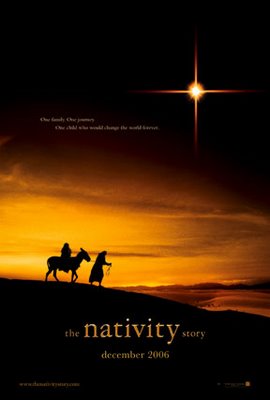
"The Nativity Story" again

HolyCoast reviews the new film, opening this weekend:
As one of their blogger-reviewers, I received an invitation from Grace Hill Media to attend a private screening of New Line Cinema's new movie, The Nativity Story. Two thumbs way, way up. I'll never look at a nativity set the same way again.

Over the years Hollywood has tried many times to make movies of Biblical stories, though there hasn't been a serious attempt for a long time. Most previous Hollywoodized versions of the Bible (for instance The Greatest Story Ever Told, The Robe, or King of Kings) tended to take the humanity out of Jesus or other Biblical characters. They always seemed to have this weird far-away look in their eyes and a funny glow around their head. The Nativity Story does a wonderful job of reminding the viewers that the people we read about in the Biblical story were real people living real lives who found themselves in extraordinary circumstances. The movie explores the dilemma they were in and how they likely had to deal with it.

The story begins with Mary's life as a young girl living and working in her family's home. In many Hollywood productions, Mary is played by a much older actress than the real Mary, who was probably only 15 or so years old. The Mary of this movie is a young girl, and Joseph a little older man. The casting seems right for the story. In fact, the casting throughout the movie is done well.

The movie is not just a dry retelling, but includes a lot of scenes of the day-to-day life in Israel at that point in history, and some humor as well. The Magi sort of become the comic foils of the movie, though their role is very serious as well. There is a lot of interesting information about their place in the nativity story, and the convergence of planets which gave rise to the Christmas star which the wise men followed.

We know that Joseph and Mary came up from Nazareth to Bethlehem, but I think we forget that it was a journey of nearly 100 miles, all of it on foot. The film gives a good representation of what that trip would have been like and the sights they might have seen along the way.

The movie takes an interesting approach in dealing with angels. The same angel appears to Mary, Joseph and the shepherds, though I couldn't get away from the fact that he looked just like country singer Eddie Rabbit from the 70's. In addition, only one angel appears to the shepherds even though the scripture describes a "heavenly host" (not "the" heavenly host).

The only time the picture takes on a bit of an old time Hollywood mystical appearance is when the baby Jesus is born and the star(s) cast a beam of light directly into the stable. But even in that scene, I was struck by the sight of Mary giving birth with only Joseph and some animals in attendance. We forget what it must have been like for people in that day.

There are some moments which could have involved graphic violence, but thankfully the filmmakers chose to use implied violence and no blood rather than graphic scenes that would be much more difficult to watch. It's not Passion of the Christ, that's for sure.

Bottom line - go see it, and if possible go see it this opening weekend. Opening weekends are very important in the Hollywood world in helping convince them that this kind of film is worth making. A slow open could make movie companies hesitant to try something of this quality again.

Take your unchurched friends as well. I think this film could make a significant impact on the lives of nonbelievers. It's that well done.
Source: HolyCoast.com: The Nativity Story

Monday, November 27, 2006

"The Language of God"

Stephen M. Barr, in a review of The Language of God by Francis S. Collins in the December First Things, writes:
It was in medical school that his [Collins'] atheism suffered a blow: "I found the relationship [I] developed with sick and dying patients almost overwhelming." The strength and solace so many of them derived from faith profoundly impressed him and left him thinking that "if faith was a psychological crutch...it must be a very powerful one." His "most awkward moment" came when an older woman, suffering from a severe and untreatable heart problem, asked him what he believed. "I felt my face flush as I stammered out the words 'I'm not really sure.'" Suddenly it was brought home to him that he had dismissed religion without ever really considering - or even knowing - the arguments in its favor. How could someone who prided himself on his scientific rationality do that? He was deeply shaken and felt impelled to carry out an honest and unprejudiced examination of religion. Attempts to read the sacred scriptures of various religions left him baffled, however, so he sought out a local Methodist minister and asked him point-blank "whether faith made any sense." The minister took a book down from his shelf and handed it to him. It was C.S. Lewis' Mere Christianity.

Lewis gave Collins a simple, though crucial, insight: God is not a part of the physical universe and therefore cannot be perceived by the methods of science. Yet God speaks to us in our hearts and minds, both in such "longings" for the transcendent as Collins had himself experienced and in the sense of objective right and wrong, "the Moral Law."...
Barr later writes:
It is interesting that Collins, a biologist, should take most of his "evidence for belief" from physics. ... One notes, by contrast, that some of the biologists who are most outspoken in their atheism have come from a background in zoology rather than the physical sciences. It may be that the scientists most susceptible to crude materialism are those who know the least about matter.
The review is not yet available online. It is not entirely uncritical, but makes the case that Collins' book is a real contribution to the Science v. Religion debate.

Burning Bibles in Uzbekistan

Mere Comments quotes from a report about the persecution of Christians:

Following a 27 August raid on a Baptist church in the southern town of Karshi, two visiting Baptists were given massive fines on 25 October of 438 US Dollars each for participating in unregistered religious worship, while four local church members were given smaller fines, Protestant sources told Forum 18 News Service. The court ordered Bibles and hymnbooks confiscated during the raid to be burnt, a regular practice with literature confiscated during raids despite official denials. (more)

Source: Mere Comments: Burning Bibles in Uzbekistan