Thursday, November 30, 2006

Christians and divorce

Reported at Christianity Today:

"...[E]vangelical women tend to be happier in their marriages than other women, particularly when both the wife and the husband attend church on a regular basis. This idea that Christians are just as likely to divorce as secular folks is not correct if we factor church attendance into our thinking. Churchgoing evangelical Protestants, churchgoing Catholics, and churchgoing mainline Protestants are all significantly less likely to divorce.

How much less likely? I estimate between 35 and 50 percent less likely than Americans who attend church just nominally, just once or twice a year, or who don't attend church at all. It is true that people who say they've had a born-again experience are about as likely to divorce as people who are completely secular. But if you look at this through the lens of church attendance, you see a very different story...."

Source: Christianity Today: What Married Women Want

Wednesday, November 29, 2006

"To free all those who trust in Him..."

Although decorations have been on sale and carols have been playing in the stores for weeks already, we are only now entering the Advent season. Wilfred McClay, at Touchstone Magazine, reminds us that the Christmas lesson is of Light piercing darkness, and if we forget the darkness, we forget the significance of the event.
"...Our Christmas carols are among the most precious shared possessions of our fragmenting, fraying culture, and for all that we abuse them and demean them, they seem to remain imperishable.

This year, somehow it's been God Rest Ye Merry, Gentlemen that has stuck in my brain, and particularly these words, in the first verse: 'To save us all from Satan's power/ When we were gone astray.' We move through these sibilant words so quickly and rhythmically. I know I always have. And yet how plainly those few words sketch in a somber background, a whole universe of presuppositions without which the song has a very different, and diminished, meaning....

We are constantly reminded to 'keep Christ in Christmas' and to remember 'the reason for the season.' And of course we should. But, if I may be permitted to put it this way, we must also keep Satan in Christmas, and not skip too lightly over the lyrics that mention him.

For he and the forces he embodies are an integral part of the story. It utterly transforms the way we understand Christmas, and our world, when we also hold in our minds a keen awareness of the darkness into which Christ came, and still must come, for our sake. Later in God Rest Ye Merry, Gentlemen the visiting angel tells the shepherds in the field that Christ has come 'To free all those who trust in him/ From Satan's power and might.'

....[T]he 'comfort and joy' of which the song speaks are not merely outbursts of seasonal jollity.

They bespeak the ecstatic gratitude of captives and cripples who recognize that, in and through Christ, the entire cosmos has been transformed, and their lives have been made new. Nothing can ever be the same again...."

Source: Touchstone Archives: God Rest Ye Merry

Science as religion

At a recent conference:
"...According to the New York Times, the controlling idea was that "science needs to take on an evangelical role, vying with religion as teller of the greatest story ever told."

The atheistic and agnostic scientists in attendance were more open and aggressive than ever. ...Richard Dawkins, Oxford professor and author of the subtly titled The God Delusion, declared: 'I am utterly fed up with the respect that we - all of us, including the secular among us - are brainwashed into bestowing on religion.' Steven Weinberg, Nobel Laureate and member of the prestigious University of Texas physics department, instructed: 'Anything that we scientists can do to weaken the hold of religion should be done and may in the end be our greatest contribution to civilization.' Another scientist said: 'Let's teach our children from a very young age about the story of the universe and its incredible richness and beauty. It is already so much more glorious and awesome - even comforting - than anything offered by any scripture or God concept I know.'

Neil deGrasse Tyson, director of New York City's Hayden Planetarium, fretted that "God on the brain" would stand in the way of the love of discovery, and displayed pictures of deformed newborns in order 'to disabuse the audience of any idea that an intelligent, loving creator could be behind our existence,' ... The beautiful rings of Saturn were offered by another scientist in implicit contrast to the unfortunate newborns. But the nature that these scientists worship caused both these things, so why should we admire their godless universe anymore than the one with God? Wouldn't you know it, the old problem of evil gets in their way too, only they don't seem to realize it.

I take that back. Weinberg does, and has famously pronounced: 'It is hard to realize that this all [i.e., life on Earth] is just a tiny part of an overwhelmingly hostile universe. It is even harder to realize that this present universe has evolved from an unspeakably unfamiliar early condition, and faces a future extinction of endless cold or intolerable heat. The more the universe seems comprehensible, the more it also seems pointless.' In what grade shall we teach children that part of the 'religion'?

So, scientists want to make science into God in order to satisfy man's need for the transcendent that he now foolishly finds in religion...."

Source: Phi Beta Cons on National Review Online

Apologetics

Via Between Two Worlds:

Free online lectures on apologetics by Douglas Groothuis, professor of philosophy at Denver Seminary.

Source: Between Two Worlds

Who really cares

From The Chronicle of Philanthropy [via Arts and Letters], a report on who actually gives to those in need - it isn't necessarily those who talk most loudly about injustice:
In Who Really Cares: The Surprising Truth About Compassionate Conservatism (Basic Books), Arthur C. Brooks finds that religious conservatives are far more charitable than secular liberals, and that those who support the idea that government should redistribute income are among the least likely to dig into their own wallets to help others....

"This book is a call to action for the left, not a celebration of the right," Mr. Brooks says.....

His initial research for Who Really Cares revealed that religion played a far more significant role in giving than he had previously believed. In 2000, religious people gave about three and a half times as much as secular people - $2,210 versus $642. And even when religious giving is excluded from the numbers, Mr. Brooks found, religious people still give $88 more per year to nonreligious charities.

He writes that religious people are more likely than the nonreligious to volunteer for secular charitable activities, give blood, and return money when they are accidentally given too much change. "There is not one measurably significant way I have ever found in which religious people are not more charitable than nonreligious people," Mr. Brooks says. "The fact is, if it weren't for religious people in your community, the PTA would shut down."

Byron R. Johnson, a sociology professor and co-director of the Institute for Studies of Religion at Baylor University, says he recently gathered data that show similar results - such as high levels of civic engagement among religious people - while assembling a report on faith in America that was released in September.

"It was not surprising to me that the lil ol' farmer in South Dakota outgave people in San Francisco," Mr. Johnson says. "But I think to the everyday citizen, this might strike them as counterintuitive."

Mr. Brooks ... writes that households headed by a conservative give roughly 30 percent more to charity each year than households headed by a liberal, despite the fact that the liberal families on average earn slightly more.

... Most of the difference in giving among conservatives and liberals gets back to religion. Religious liberals give nearly as much as religious conservatives, Mr. Brooks found. And secular conservatives are even less generous than secular liberals. [emphasis added]

At the outset of his research, Mr. Brooks had assumed that those who favor a large role for government would be most likely to give to charity. But in fact, the opposite is true.

..."In essence, for many Americans, political opinions are a substitute for personal checks," Mr. Brooks writes.

Mr. Brooks says the data show that religious people, on average, give 54 percent more per year than secular people to human-welfare charities. Some of those charities may be religiously affiliated, but their work is focused on charity and not religion, he says.

In his book, Mr. Brooks examines giving among the poor. When looking at households with equivalent income, the working poor give three times as much as welfare recipients.

... Near the end of the book, Mr. Brooks lays out the case that philanthropy is as good for the donor as for the receiver, citing data showing that giving makes one happier and healthier....

Source: The Chronicle, 11/23/2006: Charity's Political Divide

Tuesday, November 28, 2006

The suicide of a believer

Via Intellectuelle and InternetMonk I found a sermon delivered on the occasion of the funeral of a Christian who committed suicide. The entire funeral message is at byFaith Online. The "theological virtues" are faith, hope and love. Suicide has always been considered a manifestation of the opposite of hope - despair - hopelessness - inability to trust in God. In some traditions a suicide cannot be buried in consecrated ground. This passage comes toward the end of the message. The entire sermon is well worth reading.
Listen to me, what Petros did was wrong. But what he did for the last twenty-five years did not get him into the kingdom of God, and what he did almost two weeks ago will not take him from the kingdom of God. The kingdom of God is secured by another - the One who came into the darkness of this world to give himself for those who are poor in Spirit. This is the Gospel: He who was rich, made himself poor so that through his poverty we might inherit the Kingdom of God. This same Jesus who came preaching of the kingdom of God is the One who came to die in our behalf to pay the debt for our sins. He emptied himself of the privileges and glory of heaven, so that through his poverty, the heavenly riches of his righteousness would be ours. The reason that those who are so corrupted that they can be guilty of selfishness, cowardice, insensitivity and sin - even the murder of themselves, and can yet inherit the kingdom of God, is because Jesus Christ died to pay the penalty for our sins, and he rose to intercede for us before the Father on the basis of his righteousness rather than our accomplishments. When we depend on what he provides by acknowledging our poverty and trusting in his provision, then ours is the kingdom of heaven.

Isaiah 57:15, "For thus says the high and exalted One Who lives forever, whose name is Holy, I dwell on a high and holy place, and also with the contrite and lowly of spirit in order to revive the spirit of the lowly and to revive the heart of the contrite."

Now I know the questions that you still are asking yourselves - I have asked these questions of myself also:

"Yes, God can save sinners of all sorts: those who falter, and fall, and even kill. But the ones that he saves are those who repent. And, since Petros took his own life, and there was no opportunity to repent from that sin, then can he still be eligible for the kingdom of heaven?" I acknowledge to you that, despite the depth of remorse that Petros expressed for his actions in the letter read to this congregation, his repentance is inadequate. But whose repentance is ever adequate? God does not forgive us because we adequately confess our sin, but because Jesus fully covers our sin when we trust in him.

But you are also thinking, "Did Petros really trust in Christ?" "Yes," you will acknowledge, "Petros certainly was poor in spirit. But did he really trust in Jesus? If he had, could he have done this thing?" Ultimately these questions will be answered in the halls of heaven, but I will tell you what I think. Petros did not preach the Gospel all those years, or love us so well falsely. We would have known it. Instead, he got sick in mind and heart for reasons that I do not fully understand. That sickness made him very poor in spirit, and he lost his hold on what was best in him and for him. But I do not think that the strength of his grasp is what counts but rather the strength of the One who grasps him. The love of Jesus Christ is more than strong enough to compensate for any weakness of faith in us.
Source: byFaith Online

Comfortable religion

At Touchstone, James M. Harrison comments on The Bike Pastor's Comfortable Religion:

"... Maybe I've missed something along the way, but when did providing people with recreation become the purpose of the Church?

When did Christ change his call from 'Take up your cross and follow me' to 'Come to this place that we don't really want to call a church, and recreate'? When did the nature of the Lord's Day change from being a time when the people of God gather together for God-centered worship and the preaching of his Word to, as this church's worship leader describes it, 'an event that even the most anti-religious person can come [to] and feel comfortable'?

'Feel comfortable.' How is an unbeliever to feel comfortable sitting there in the midst of a peculiar people who are offering worship to a holy God with whom, according to the Scripture, he is at enmity? How is an 'anti-religious' person to feel comfortable in a place where the gospel being proclaimed is to him foolishness and a stumbling block?

Of course, as Paul writes these things in 1 Corinthians, he does put forth a third option. To the unbeliever, the gospel will be foolishness, or a stumbling block, or the power of God unto salvation. But for Paul, whether unbelievers heard the gospel as foolishness, or a stumbling block, or the power of God, had nothing to do with whether or not they were comfortable. It had nothing to do with their felt needs, either. The result of the gospel, Paul believed, was dependent upon the work of God in an individual's life.

It had to be this way, Paul says, so that issues would not get confused. Has someone professed Christ as the result of the genuine work of God in his life? Or is he here among the people of God because of the recreation? That was a real concern for Paul. And his method of addressing that concern was to make sure that nothing stood in competition with the proclamation of the word of God.

I'm not so sure that Paul would be very enthused about a 'recreational' church."
[the article]

Source: Touchstone Archives: Recreational Sect

"Napoleon Dynamite"

Although I enjoyed the film, it never occurred to me that it might convey a Christian[!] message [or any message at all]:

Napoleon Dynamite is a humorous but touching critique of the inevitable loneliness and meaninglessness of individualism when it is stripped of the context of genuine community. Its message is consistent with a Christian moral anthropology, that human beings are not intended to "fly solo," but made to live in a community marked by the vulnerability and sacrifice of love. [the review]

Source: Touchstone Archives: Napoleon Blown Apart

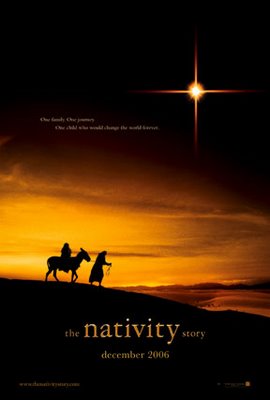
"The Nativity Story" again

HolyCoast reviews the new film, opening this weekend:
As one of their blogger-reviewers, I received an invitation from Grace Hill Media to attend a private screening of New Line Cinema's new movie, The Nativity Story. Two thumbs way, way up. I'll never look at a nativity set the same way again.

Over the years Hollywood has tried many times to make movies of Biblical stories, though there hasn't been a serious attempt for a long time. Most previous Hollywoodized versions of the Bible (for instance The Greatest Story Ever Told, The Robe, or King of Kings) tended to take the humanity out of Jesus or other Biblical characters. They always seemed to have this weird far-away look in their eyes and a funny glow around their head. The Nativity Story does a wonderful job of reminding the viewers that the people we read about in the Biblical story were real people living real lives who found themselves in extraordinary circumstances. The movie explores the dilemma they were in and how they likely had to deal with it.

The story begins with Mary's life as a young girl living and working in her family's home. In many Hollywood productions, Mary is played by a much older actress than the real Mary, who was probably only 15 or so years old. The Mary of this movie is a young girl, and Joseph a little older man. The casting seems right for the story. In fact, the casting throughout the movie is done well.

The movie is not just a dry retelling, but includes a lot of scenes of the day-to-day life in Israel at that point in history, and some humor as well. The Magi sort of become the comic foils of the movie, though their role is very serious as well. There is a lot of interesting information about their place in the nativity story, and the convergence of planets which gave rise to the Christmas star which the wise men followed.

We know that Joseph and Mary came up from Nazareth to Bethlehem, but I think we forget that it was a journey of nearly 100 miles, all of it on foot. The film gives a good representation of what that trip would have been like and the sights they might have seen along the way.

The movie takes an interesting approach in dealing with angels. The same angel appears to Mary, Joseph and the shepherds, though I couldn't get away from the fact that he looked just like country singer Eddie Rabbit from the 70's. In addition, only one angel appears to the shepherds even though the scripture describes a "heavenly host" (not "the" heavenly host).

The only time the picture takes on a bit of an old time Hollywood mystical appearance is when the baby Jesus is born and the star(s) cast a beam of light directly into the stable. But even in that scene, I was struck by the sight of Mary giving birth with only Joseph and some animals in attendance. We forget what it must have been like for people in that day.

There are some moments which could have involved graphic violence, but thankfully the filmmakers chose to use implied violence and no blood rather than graphic scenes that would be much more difficult to watch. It's not Passion of the Christ, that's for sure.

Bottom line - go see it, and if possible go see it this opening weekend. Opening weekends are very important in the Hollywood world in helping convince them that this kind of film is worth making. A slow open could make movie companies hesitant to try something of this quality again.

Take your unchurched friends as well. I think this film could make a significant impact on the lives of nonbelievers. It's that well done.
Source: HolyCoast.com: The Nativity Story

Monday, November 27, 2006

"The Language of God"

Stephen M. Barr, in a review of The Language of God by Francis S. Collins in the December First Things, writes:
It was in medical school that his [Collins'] atheism suffered a blow: "I found the relationship [I] developed with sick and dying patients almost overwhelming." The strength and solace so many of them derived from faith profoundly impressed him and left him thinking that "if faith was a psychological crutch...it must be a very powerful one." His "most awkward moment" came when an older woman, suffering from a severe and untreatable heart problem, asked him what he believed. "I felt my face flush as I stammered out the words 'I'm not really sure.'" Suddenly it was brought home to him that he had dismissed religion without ever really considering - or even knowing - the arguments in its favor. How could someone who prided himself on his scientific rationality do that? He was deeply shaken and felt impelled to carry out an honest and unprejudiced examination of religion. Attempts to read the sacred scriptures of various religions left him baffled, however, so he sought out a local Methodist minister and asked him point-blank "whether faith made any sense." The minister took a book down from his shelf and handed it to him. It was C.S. Lewis' Mere Christianity.
Lewis gave Collins a simple, though crucial, insight: God is not a part of the physical universe and therefore cannot be perceived by the methods of science. Yet God speaks to us in our hearts and minds, both in such "longings" for the transcendent as Collins had himself experienced and in the sense of objective right and wrong, "the Moral Law."...
Barr later writes:
It is interesting that Collins, a biologist, should take most of his "evidence for belief" from physics. ... One notes, by contrast, that some of the biologists who are most outspoken in their atheism have come from a background in zoology rather than the physical sciences. It may be that the scientists most susceptible to crude materialism are those who know the least about matter.
The review is not yet available online. It is not entirely uncritical, but makes the case that Collins' book is a real contribution to the Science v. Religion debate.

Burning Bibles in Uzbekistan

Mere Comments quotes from a report about the persecution of Christians:

Following a 27 August raid on a Baptist church in the southern town of Karshi, two visiting Baptists were given massive fines on 25 October of 438 US Dollars each for participating in unregistered religious worship, while four local church members were given smaller fines, Protestant sources told Forum 18 News Service. The court ordered Bibles and hymnbooks confiscated during the raid to be burnt, a regular practice with literature confiscated during raids despite official denials. [more]

Source: Mere Comments: Burning Bibles in Uzbekistan

December, 2006 Sabbath Recorder Online


The December, 2006, Sabbath Recorder is available online here. It includes several interesting articles about Seventh Day Baptists and music - now and in the past.

Saturday, November 25, 2006

"The Nativity Story"

Mark D. Roberts reviews the upcoming film The Nativity Story:
"... Today I want to note a few salient points that make The Nativity Story such a fine movie.
1. The movie is faithful to the biblical accounts of Jesus's birth....
2. The movie provides a creative, compelling, and historically-sensible picture of life suggested by but not specifically mentioned in Scripture...
3. The movie doesn't offer up too much religious schmaltz....
4. The Nativity Story dramatizes aspects of the Christmas story that I had not before considered....
5. The Nativity Story does not turn its major characters into glow-in-the dark, other-worldly superman and superwoman....
6. The Nativity Story includes some stunning scenery and wonderful music....

My Recommendations First of all, be sure to see this movie! ... But, second, don't only see the film, get others to see it! If you're a pastor, let your church know about this movie. If you're a youth leader, tell your kids. ... There is nothing "preachy" about this film, nothing that would offend a non-believer...." [the entire review]

His full review elaborates on each of the points above.

11/28 Albert Mohler has seen the film and also approves.

Best children's books

World magazine lists various people's suggestions for the best children's books [subscription required]:
Howard & Roberta Ahmanson Based in California, Howard is president of Fieldstead and Company, a private philanthropy. Roberta is a writer who works with Howard. They have one son: "Our idea of a good time is to sit and read together. We have read many of these books out loud together."

● A Wind in the Door, Madeleine L'Engle (Roberta's favorite)
● The Silver Chair, C.S. Lewis (Howard's favorite)
● Alice in Wonderland, Lewis Carroll
● Harriet the Spy, Louise Fitzhugh (a children's book not for children)
● The Lost Princess, George McDonald

Mark & Acacia Bergen The Bergens live in Seattle and have one born child and another due next month; Mark is a WORLD reporter.

Picture Books
● Blueberries for Sal, Robert McCloskey
● Cloudy with a Chance of Meatballs, Judi Barrett
● A Light in the Attic, Shel Silverstein
● Love You Forever, Robert N. Munsch
● One Fish Two Fish, Red Fish Blue Fish, Dr. Seuss

Chapter Books
● Prince Caspian, C.S. Lewis
● The Phantom Tollbooth, Norton Juster
● Half Magic, Edward Eager
● Henry Huggins, Beverly Cleary
● James and the Giant Peach, Roald Dahl
Etc.

The Episcopal Church is in big trouble II

Things just get worse for Episcopalians:
According to a Religion News Service story, the new presiding bishop of the Episcopal Church has warned the Diocese of San Joaquin not to try to leave the Episcopal Church. Katharine Jefferts Schori told its bishop, the genial and courageous John-David Schofield,
"Our forbears did not build churches or give memorials with the intent that they be removed from the Episcopal Church. Nor did our forbears give liberally to fund endowments with the intent that they be consumed by litigation."
One would think she'd have someone at the Episcopal Church headquarters to say "Don't go there" when she starts writing like this. Strictly speaking, she is right in claiming what she does, but this is not an argument an advocate of approving sodomy and marrying homosexual people who is rather vague on the exact purpose of believing in Jesus Christ should raise.

The obvious response is: "Our forebears did not build churches or give memorials with the intent that they be run by people like Katharine Jefferts Shori and used to marry people of the same sex and employ heretics and skeptics."
I am often grateful for congregational polity:
"We believe in the priesthood of all believers and practice the autonomy of the local congregation, as we seek to work in association with others for more effective witness." [emphasis added]

Thursday, November 23, 2006

"Between two worlds"

Between Two Worlds consistently has some of the most interesting commentary and links to some of the most interesting material. Today, among much else, it refers to an important question evangelicals will have to address as the next Presidential election approaches. Can evangelicals support a Mormon?
The discussions about Mormonism and Christianity are going to intensify rapidly in the next couple of years, especially if - as I suspect - Gov. Mitt Romney will be the GOP presidential nominee in 2008. Now is the time for Christian pastors, leaders, and teachers to bone up on the subject with a view toward instructing the church in answer to the inevitable questions that are going to arise. (This topic was a significant part of Hugh Hewitt's plenary address at ETS, where he suggested to the evangelical scholars in attendance that it would be a serious mistake for evangelicals to reject Romney because he is a Mormon--in part because the exact same premises will be used in arguments to exclude evangelicals from the public square. Hewitt also revealed that he is almost done writing a book on Romney.)

For an introduction to the history and beliefs of Mormonism, a helpful place to start reading might be Richard and Joan Ostling's
Mormon America: The Power and the Promise. Richard John Neuhaus recently reviewed it, and along the way he provides a helpful primer in his own right.
My own view is that the candidate's theology probably doesn't matter much. The important question is what the candidate will do when in office. Would a Mitt Romney advance policies with which I agree? His Mormonism is no more important in that regard than would be the religious commitments of any other candidate.

There are other posts today at Between Two Worlds about fearing God, not man, a video starring John Piper, Benny Hinn's behavior, a biography of Roger Nicole, a new book about Martin Luther, a new paper about the "emerging church," and so on. If you take the time to look in at it the site is very rewarding.

Wednesday, November 22, 2006

A joyful and blessed Thanksgiving!

Freedom from Want, Norman Rockwell, 1943

Now thank we all our God, with heart and hands and voices,
Who wondrous things has done, in Whom this world rejoices;
Who from our mothers’ arms has blessed us on our way
With countless gifts of love, and still is ours today.

O may this bounteous God through all our life be near us,
With ever joyful hearts and blessèd peace to cheer us;
And keep us in His grace, and guide us when perplexed;
And free us from all ills, in this world and the next!

All praise and thanks to God the Father now be given;
The Son and Him Who reigns with Them in highest Heaven;
The one eternal God, Whom earth and Heaven adore;
For thus it was, is now, and shall be evermore.
Mar­tin Rink­art, cir­ca 1636

Tuesday, November 21, 2006

Atheism

From CQOD today comes this by Joy Davidman, the woman who later married C.S. Lewis. She describes paganism as at least interesting in contrast to atheism, which, she says, can be unconscious.
The old pagans had to choose between a brilliant, jangling, irresponsible universe, alive with lawless powers, and the serene and ordered universe of God and law. We modern pagans have to choose between that divine order, and the grey, dead, irresponsible, chaotic universe of atheism. And the tragedy is that we may make that choice without knowing it - not by clear conviction but by vague drifting, by losing interest in Him. A nominal deist will say: "Yes, of course there must be some sort of Force that created the galaxy. But it’s childish to imagine that It has any personal relation to me!" In that belief atheism exists as an undiagnosed disease. The man who says, "One God," and does not care, is an atheist in his heart. The man who speaks of God and will not recognize Him in the burning bush - that man is an atheist, though he speak with the tongues of men or angels, and appear in his pew every Sunday, and make large contributions to the church. Joy Davidman (Smoke on the Mountain [1955]

Monday, November 20, 2006

"The God who gave us life gave us liberty..."

In the October First Things, Michael Novak reviewed two books about religion and the American Founders. A section that is relevant to the discussion about the "wall of separation" and our current discussion about the BJC's understanding of American history:
NONETHELESS, THE MINDS of most of the Founders, even the least orthodox among them, had been formed by the Bible, and virtually all quoted from Scripture much more than they quoted from any other author. Even the least orthodox among them, such as Jefferson and Benjamin Franklin (the two outliers in this respect), wrote frequently of God, Judgment Day, and Providence. All held with the Declaration that all men “are endowed by their Creator with certain unalienable rights,” and with Jefferson’s personal aphorism that “the God who gave us life gave us liberty at the same time.”

Consider that the opening words of the Virginia Statute for Religious Freedom announced quite starkly: “Whereas
Almighty God hath created the mind free . . . ” [emphasis added]

For Holmes and Meacham alike, the by-now conventional notion that the Founders were purely men of the Enlightenment does not satisfy the evidence. Yes, the Founders sometimes took up such themes as common sense and limited government and religious liberty in the language of Enlightenment thinkers. But they also strongly believed that, while conscience and religious liberty must be inviolable, and church and state ought to be separate, nevertheless, government still has the duty to support religion, by one method or another.

“Whatever may be conceded to the influence of refined education on minds of peculiar structure,” Washington wrote, the morals required for republican government depend, for most people, on religious cultivation.
[the rest]
Even the Deism believed by a few of the Founders isn't the same thing as atheism, humanism or even secularism.

Experience and reality

Ross Douthat reacts to a brain-scan study of people experiencing glossolalia, i.e. "speaking in tongues." He concludes:
I am ... consistently puzzled by the resistance, whether it's among my friends and neighbors or the Sam Harrises of the world, to any consideration of the notion that religious experience might be like most other widespread human experiences - which is to say, a response to something that's actually out there. Atheistically-inclined scientists and philosophers have all manner of complicated theories about how religious experience and beliefs sprang up in homo sapiens - maybe it's a useful mutation, maybe it's an accidental byproduct of a useful mutation, etc. Some of these theories feel like so much hand-waving, but some are at least plausible. On the other hand, the eye exists because of interactions with light, and the eardrum because of interactions with sound waves; romantic love may be "biochemically no different from eating large amounts of chocolate," as Al Pacino's devil would have us believe, but both the chocolate and the woman of your dreams are still realities, not just the product of your firing neurons. As soon as homo sapiens developed consciousness, we became conscious of (what seems to be) a numinous reality interwoven with our own; it's just possible, surely, that we started experiencing the numinous because it happens to be real. [emphasis added]
And, as C.S. Lewis wrote:
"If I find in myself a desire which no experience in this world can satisfy, the most probable explanation is that I was made for another world." [Mere Christianity]

Dawkins again

From James M. Kushiner at Mere Comments:
I usually manage to find something interesting to read while waiting in doctor's offices, even if I have to resort to something I put into my briefcase that day. This morning, I found something on the doctor's "coffee table" (of course, no coffee in sight). It was the recent issue of Time Magazine about "God versus Science" (He's against science?), and it featured a debate, of sorts, between Francis Collins, a Christian, and Richard Dawkins, an atheist evangelist.

I took notes (no laptop on hand):
Time: Could the answer [to what's behind the Universe] be God?

Dawkins: There could be something incredibly grand and incomprehensible and beyond our present understanding.

Collins: That's God.

Dawkins: Yes. But it could be any of a billion Gods. It could be God of the Martians or of the inhabitants of Alpha Centauri. The chance of its being a particular God, Yahweh, the God of Jesus, is vanishing small - at the least the onus is on you to demonstrate why you think that's the case.
If anyone has read Dawkins' latest best-selling evangelical tract for atheism, The God Delusion, perhaps you could tell me if Dawkins demonstrates why Jesus's claim to be God Incarnate should be rejected as resting on a vanishing small chance of being true.
Dawkins: [later] I don't see the Olympian Gods or Jesus coming down and dying on the Cross as worthy of that grandeur. They strike me as parochial. If there's a God, it's going to be a whole lot more incomprehensible than anything that any theologian of any religion has ever proposed.
Dawkins, here, I submit, is really making a theological argument, though I doubt he would admit it. What's worthy of grandeur? [The rest]

Idolatry

From the evangelical outpost:

Murder, theft, and adultery get all the press while idolatry has become the sin that dares not speak it name. Violations of the first commandment, however, are by far our most pervasive sin. In fact, it is often the root of sin. What sin cannot be traced back to our desire to put ourselves in God’s place, allowing us to rebel against our Creator with impunity?

Still, it is rather shocking to hear someone be unabashedly open about their idolatry as Bart Campolo, son of Tony Campolo, is in a recent article for
The Journal of Student Ministries [Note: the article has been removed from that site]:
Some might say I would be wise to swallow my misgivings about such stuff [like God's sovereignty, wrath, hell, etc.], remain orthodox, and thereby secure my place with God in eternity. But that is precisely my point: If those things are true, then God might as well send me to Hell. For better or worse, I simply am not interested in any God but a completely good, entirely loving, and perfectly forgiving One who is powerful enough to utterly triumph over evil. Such a God may not exist, but I will die seeking such a God, and I will pledge my allegiance to no other possibility because, quite frankly, anything less is not worthy of my worship.

Please, don’t get me wrong. I am well aware that I don’t get to decide who God is. What I do get to decide, however, is to whom I pledge my allegiance. I am a free agent, after all, and I have standards for my God, the first of which is this: I will not worship any God who is not at least as compassionate as I am.
[the rest]
"I have standards for my God" - He must be at least as good as I am. He seems to be saying that his standards are higher than the standards of the God Who is. The Greeks called this hubris and it is the original sin - putting yourself in the place of God - "my will - not His."

Sunday, November 19, 2006

Seventh Day Baptist Forums


A new location for Seventh Day Baptists to exchange information and opinions can be found at SDB Forums.

"A conversation on religion"

At the Washington Post website Albert Mohler states an Evangelical position about the possibility of dialogue among people of various faiths [and people of none]. Part of his statement:
No human (or humans) should claim a monopoly on truth. Indeed, evangelical Christians should be the very first to insist that only God holds a "monopoly" on truth. As for we mortals? No monopoly. What the philosophers call "epistemic humility" is incumbent on us all. With our finite minds, social limitations, and limited intelligence, we know less than the sum total of what we do not know. Confession of that fact is, as they say, good for the soul.

On the other hand, evangelical Christians must make clear our belief that God has in fact revealed himself to us through the gift of his self-revelation. Thus, we now know what we otherwise never could have known. Our knowledge of God and all things He has revealed are no tribute to our intelligence, but rather to God's love for us.

So, when evangelical Christians show up for conversation about the things that matter most, we show up as the people who believe that God has spoken truthfully to us in the Bible - and supremely in Jesus Christ. Do we believe that we possess a monopoly on truth? No. But we do believe that God has spoken, and that we must be faithful to his Word. In other words, we are making a claim that God has revealed himself in a way that gives us access to absolute truth. Furthermore - and here again we must be very honest - we believe that God has revealed himself in the Bible and in Jesus Christ in a way that is unique, definitive, particular, and universal in claim.
Mark Dever at Together for the Gospel remarks:
If you haven't had a conversation with a non-Christian lately, the various, largely hostile, responses to Al's simple statements will remind you of the climate we are in.

Thursday, November 16, 2006

Paul Manuel: Forgiveness

God’s Forgiving Us and Our Forgiving Others
Dr. Paul Manuel
Rev. Paul Manuel is pastor of the German Seventh-Day Baptist Church in Salemville, PA. His Ph.D. is in Hebrew and Semitic Studies from the University of Wisconsin-Madison.
There is a common and unqualified assumption in Christian circles that the proper response to all personal offenses is to “forgive and forget” (“let bygones be bygones”), and that not to do so places one at risk of divine condemnation. As Jesus warned the disciples,
Matt 6:15 … if you do not forgive men their sins, your Father will not forgive your sins.
The immediate difficulty with such an assumption is that it holds the believer, who, Jesus says, must forgive all, to a higher standard than it holds God, who needs not forgive all. Several New Testament passages link or condition God’s forgiveness of the believer with the believer’s forgiveness of others, but is forgiveness completely one-sided and open-ended? Are there restrictions on what the believer can and should forgive? For the answer, we must look to more explicit passages.

First, it is necessary to understand the definition of the term “forgive.” The Hebrew and Greek words mean to release a person from guilt or punishment. Forgiveness is a legal (judicial) designation that eliminates the indebtedness of one party to another and, thereby, alters the status of their relationship. It includes both a remission of guilt and a restoration of fellowship.
Forgiveness is the wiping out of an offense from memory; it can be effected only by the one affronted. Once eradicated, the offense no longer conditions the relationship between the offender and the one affronted, and harmony is restored between the two.
I. God’s Forgiveness in the Old Testament

God and the biblical authors make clear that, despite man’s sin, God is willing and able to forgive.
Exod 34:6 And he passed in front of Moses, proclaiming, “The LORD, the LORD, the compassionate and gracious God, slow to anger, abounding in love and faithfulness, 7a maintaining love to thousands, and forgiving wickedness, rebellion and sin.
Almost all references to divine forgiveness, however, explicitly include the prerequisite of repentance. (1)
2 Chr 7:14 if my people, who are called by my name, will humble themselves and pray and seek my face and turn from their wicked ways, then will I…will forgive their sin….
In fact, there is no indication that God pardons unrepentant sin. (2)
Jer 5:7 Why should I forgive you? Your children have forsaken me and sworn by gods that are not gods. I supplied all their needs, yet they committed adultery and thronged to the houses of prostitutes.
Persistent and deliberate sin is beyond forgiveness. (3)

When man does repent, the result of God’s forgiveness is reconciliation, as He removes the offense and restores the relationship. (4)
Ps 51:9 Hide your face from my sins and blot out all my iniquity. 10 Create in me a pure heart, O God, and renew a steadfast spirit within me. 11 Do not cast me from your presence or take your Holy Spirit from me. 12 Restore to me the joy of your salvation and grant me a willing spirit, to sustain me.
Ps 85:1 You showed favor to your land, O LORD; you restored the fortunes of Jacob. 2 You forgave the iniquity of your people and covered all their sins.
When man does not repent, God, in His compassion, may pass over sin, restraining His wrath and delaying His judgment to allow time for repentance (or recalcitrance), but that delay is not forgiveness. It is merely a stay of execution. (5)
Jer 18:8 …if that nation I warned repents of its evil, then I will relent and not inflict on it the disaster I had planned.
Gen 15:16 In the fourth generation your descendants will come back here, for the sin of the Amorites has not yet reached its full measure.
II. God’s Forgiveness in the New Testament

New Testament references confirm these observations from the Old Testament. Despite man’s sin, God is willing and able to forgive. (6)
1 John 1:9 …he is faithful and just and will forgive us our sins and purify us from all unrighteousness.
God’s forgiveness is contingent (where explicit) upon repentance. (7)
Acts 2:37a When the people heard this, they were cut to the heart…. 38a …Repent and be baptized, every one of you, in the name of Jesus Christ for the forgiveness of your sins.
In the absence of repentance, God does not forgive.
Acts 8:22 Repent of this wickedness and pray to the Lord. Perhaps he will forgive you for having such a thought in your heart.
Again, some sin is beyond forgiveness. (8)

When man does repent, the result of God’s forgiveness is reconciliation, as He removes the offense and restores the relationship.
Col 1:21 Once you were alienated from God and were enemies in your minds because of your evil behavior. 22 But now he has reconciled you by Christ’s physical body through death to present you holy in his sight, without blemish and free from accusation—
Col 2:13 When you were dead in your sins and in the uncircumcision of your sinful nature, God made you alive with Christ. He forgave us all our sins,
When man does not repent, God, in His compassion, may pass over sin, patiently delaying judgment, but that delay is not forgiveness. (9)
Rom 2:4 Or do you think lightly of the riches of His kindness and tolerance and patience, not knowing that the kindness of God leads you to repentance?
III. Man’s Forgiveness in the Old Testament

If God offers His pardon only to those who repent, it is likely this same condition obtains for the believer. There are, however, very few Old Testament references to the forgiveness that man imparts to man, and none in didactic literature.

IV. Man’s Forgiveness in the New Testament

The New Testament makes a significant contribution in its greater treatment of horizontal forgiveness. God expects the believer to emulate Him and be willing to forgive. (10)
Col 3:13 Bear with each other and forgive whatever grievances you may have against one another. Forgive as the Lord forgave you.
Also like God, however, obtaining the believer’s forgiveness has the same prerequisite: repentance. (11)
Luke 17:3b If your brother sins, rebuke him, and if he repents, forgive him.
Notice that the response to sin is not forgiveness but rebuke. (12) Only after the offender repents is it proper for the believer to forgive. (13) There is no indication that the believer pardons unrepentant sin, as Jesus makes clear in the rest of his statement.
Luke 17:3b “If your brother sins, rebuke him, and if he repents, forgive him. 4 If he sins against you seven times in a day, and seven times comes back to you and says, ‘I repent,’ forgive him.”
The believer forgives as God forgives—repeatedly but conditionally (i.e., upon repentance). (14) Forgiveness, regardless of the source, is not an automatic response to sin. Rather, it is dependent upon a change in the offender. Without such a change, there can be no restoration of fellowship. Hence, it is necessary for him to seek forgiveness. When he does, the result of his brother’s forgiveness is reconciliation, as his brother removes the offense and restores the relationship.
Matt 5:23 Therefore, if you are offering your gift at the altar and there remember that your brother has something against you, 24 leave your gift there in front of the altar. First go and be reconciled to your brother; then come and offer your gift.
Without repentance, neither God nor the believer is under any compulsion to forgive. (15) We must be careful, though, not to reduce all relationships to a cycle of offense, repentance, and forgiveness. There are numerous instances when an offender does not repent because of pride or ignorance. In such cases, the believer should emulate another divine response, forbearance, the particular expression of which may vary according to the situation.

• In response to (church) family disputes, where close contact often brings sundry slights and annoyances, the most helpful quality may be love.
Lev 19:18 Do not…bear a grudge against one of your people, but love your neighbor….
1 Cor 13:5c-d [Love] is not easily angered, it keeps no record of wrongs.
1 Pet 4:8b …love covers over a multitude of sins.
• In response to exploitation, where the offender takes advantage of his superior position, the most helpful quality may be patient endurance. (16)
Matt 5:39b If someone strikes you on the right cheek, turn to him the other also. 40 And if someone wants to sue you and take your tunic, let him have your cloak as well. 41 If someone forces you to go one mile, go with him two miles. 42 Give to the one who asks you, and do not turn away from the one who wants to borrow from you.
• In response to vindictive opposition, where the offender is intent upon acting contrary to your interests, the most helpful quality may be benevolence. (17)
Matt 5:44b Love your enemies and pray for those who persecute you, 45 that you may be sons of your Father in heaven. He causes his sun to rise on the evil and the good, and sends rain on the righteous and the unrighteous…. 48 Be perfect, therefore, as your heavenly Father is perfect.
Rom 12:20 “If your enemy is hungry, feed him; if he is thirsty, give him something to drink. In doing this, you will heap burning coals on his head.” [= Prov 25:21-22a] 21 Do not be overcome by evil, but overcome evil with good.
• In response to a crime, where the offender is unrepentant or even unknown, the most helpful quality may be faith in the recompense of God, who will “not leave the guilty unpunished” (Exod 34:7b; Num 14:18b; Neh 1:3a). (18)
Rom 12:19 Do not take revenge, my friends, but leave room for God’s wrath, for it is written: “It is mine to avenge; I will repay,” says the Lord.
The believer is to mirror God’s response, but that response is not open-ended. For example, there is a limit to patient endurance: insult not injury, cloak not pants, two miles not three, loan not bankruptcy. There is also a purpose to benevolence: the shaming of one’s enemy into repentance. Just as God will not continue offering reconciliation to those who prove stubbornly unreceptive to His positive overtures, so the believer need not continue his efforts in this matter if it is evident the offender has no such interest. These qualities all come under the rubric of forbearance (not forgiveness).

Although some people use the term forgiveness broadly, to describe any positive attempt to deal with interpersonal conflict, it has the specific connotation of a judicial pronouncement. It also has specific results: a remission of guilt and a restoration of fellowship. When a situation does not lend itself to that kind of resolution, there are still constructive alternatives to anger or frustration. Those alternatives are not the same as forgiveness, but they enable us to avoid bitterness over unresolved disputes and to put such matters behind us. (19)

Endnotes:
(1) Repentance can take several forms:
Sacrifice Lev 5:10 The priest shall…make atonement for him…and he will be forgiven. [= vv. 13a, 16b, 18b; 6:7]
Contrition Ps 130:2b …be attentive to my cry for mercy…. 4 But with you there is forgiveness; therefore you are feared.
Confession Ps 32:5 …I acknowledged my sin to you…and you forgave the guilt of my sin.
Restitution Lev 6:5 He must make restitution in full, add a fifth of the value to it and give it all to the owner on the day he presents his guilt offering…. 7 In this way the priest will make atonement for him…and he will be forgiven….
The prophets speak of national forgiveness in the Messianic Age, yet that, too, will follow national repentance.

Jer 50:20 In those days, at that time,” declares the LORD, “search will be made for Israel’s guilt, but there will be none, and for the sins of Judah, but none will be found, for I will forgive the remnant I spare.
Zech 12:10 And I will pour out on the house of David and the inhabitants of Jerusalem a spirit of grace and supplication. They will look on me, the one they have pierced, and they will mourn for him as one mourns for an only child, and grieve bitterly for him as one grieves for a firstborn son…. 13:1 On that day a fountain will be opened to the house of David and the inhabitants of Jerusalem, to cleanse them from sin and impurity.
(2) That is, He withholds pardon until the offenders repent.
Lam 3:42 We have sinned and rebelled and you have not forgiven.
Furthermore, divine pardon does not eliminate all consequences, only the most dire one(s). Though forgiven, man may still suffer the results of his sin.
Exod 34:7 …forgiving wickedness, rebellion and sin. Yet he does not leave the guilty unpunished; he punishes the children and their children for the sin of the fathers to the third and fourth generation.”
(3) There are several examples in scripture.
Deut 29:20a The LORD will never be willing to forgive him; his wrath and zeal will burn against that man.
1 Sam 3:14b The guilt of Eli’s house will never be atoned for by sacrifice or offering.
(4) It was David’s experience and Isaiah’s exhortation.
2 Sam 12:13 Then David said to Nathan, “I have sinned against the LORD.” Nathan replied, “The LORD has taken away your sin. You are not going to die.
Isa 55:7 Let the wicked forsake his way and the evil man his thoughts. Let him turn to the LORD, and he will have mercy on him, and to our God, for he will freely pardon.
(5) In some cases, God does not acquit the guilty but rather ‘carries on’ the sin from one generation to another, until expiated.
Exod 20:5 [= Deut 5:9] …I, the LORD your God, am a jealous God, punishing the children for the sin of the fathers to the third and fourth generation of those who hate me,
Ps 79:8 Do not hold against us the sins of the fathers; may your mercy come quickly to meet us, for we are in desperate need.
2 Sam 12:13b Nathan replied, “The LORD has taken away your sin. You are not going to die. 14 But because by doing this you have made the enemies of the LORD show utter contempt, the son born to you will die.”
(6) This is solely God’s prerogative.
Mark 2:7b Who can forgive sins but God alone?
(7) As in the Old Testament, repentance may take several forms.
Sacrifice Eph 1:7a In him we have redemption through his blood, the forgiveness of sins…
Contrition Luke 7:44b …she wet my feet with her tears and wiped them with her hair…. 47a Therefore, I tell you, her many sins have been forgiven—for she loved much.
Confession 1 John 1:9 If we confess our sins, he is faithful and just and will forgive us our sins….
Restitution Luke 19:8 …Zacchaeus…said to the Lord, “Look, Lord! Here and now I give half of my possessions to the poor, and if I have cheated anybody out of anything, I will pay back four times the amount.” 9 Jesus said to him, “Today salvation has come to this house, because this man, too, is a son of Abraham.”
(8) Even as Jesus extols the breadth of God’s forgiveness, he warns his followers about the limit of that forgiveness.
Matt 12:31 And so I tell you, every sin and blasphemy will be forgiven men, but the blasphemy against the Spirit will not be forgiven. 32 Anyone who speaks a word against the Son of Man will be forgiven, but anyone who speaks against the Holy Spirit will not be forgiven, either in this age or in the age to come.
Jesus’ and Stephen’s final prayers may reflect their concern that the offenders are perilously close to blasphemy. Nevertheless, although the offense is against the two victims, they do not express their forgiveness but intercede with God for His mercy.
Luke 23:34a Jesus said, “Father, forgive them, for they do not know what they are doing.”
Acts 7:60a Then he fell on his knees and cried out, "Lord, do not hold this sin against them."
Perhaps Jesus and Stephen are hoping for or anticipating some future change of heart. In any case, there is also no indication that God granted their request. He did not grant even His son’s every petition.
Mark 14:36a “Abba, Father,” he said, “everything is possible for you. Take this cup from me.”
Likewise, God did not always grant the petitions of His people.
2 Cor 12:8 Three times I pleaded with the Lord to take it away from me.
The two incidents with Jesus and Stephen are historical narrative, which does not have the same force as didactic material. They may also not be complete transcriptions. Given what scripture actually teaches on this subject, including what Jesus instructs elsewhere (e.g., Luke 17:3), he and Stephen were probably not requesting a blank check for absolution but were tacitly assuming the biblical prerequisite: “when they realize their error and repent.”
(9) When in forbearance He does relent, it is just a temporary stay of judgment.
Rom 3:25 God presented him as a sacrifice of atonement, through faith in his blood. He did this to demonstrate his justice, because in his forbearance he had left the sins committed beforehand unpunished—
1 Thess 2:16 in their effort to keep us from speaking to the Gentiles so that they may be saved. In this way they always heap up their sins to the limit. The wrath of God has come upon them at last.
2 Pet 3:9b He is patient with you, not wanting anyone to perish, but everyone to come to repentance.
In the end, the delay will only underscore the guilt of the unrepentant.
(10) God’s forgiveness becomes a model (as well as a basis) for the believer’s forgiveness.
Eph 4:32 Be kind and compassionate to one another, forgiving each other, just as in Christ God forgave you.
In addition to expressing one’s gratitude, forgiving others contains an element of self-interest.
Luke 6:37c Forgive, and you will be forgiven.
Mark 11:25 …if you hold anything against anyone, forgive him, so that your Father in heaven may forgive you your sins.
(11) Here, as well, repentance can take various forms.
Contrition 2 Cor 2:7 …you ought to forgive and comfort him, so that he will not be overwhelmed by excessive sorrow.
Confession Luke 15:18 I will…go back to my father and say to him: Father, I have sinned against heaven and against you.
(12) Elsewhere, Jesus repeats the importance of confronting sinful behavior and outlines a graduated approach.
Matt 18:15a If your brother sins against you, go and show him his fault, just between the two of you…. 16 But if he will not listen, take one or two others along, so that ‘every matter may be established by the testimony of two or three witnesses.’ 17 If he refuses to listen to them, tell it to the church; and if he refuses to listen even to the church, treat him as you would a pagan or a tax collector.
(13) The onus is with both parties to make the first move.
Offended Matt 18:15 If your brother sins against you, go and show him his fault, just between the two of you. If he listens to you, you have won your brother over.
Offender Luke 12:58 As you are going with your adversary to the magistrate, try hard to be reconciled to him on the way, or he may drag you off to the judge, and the judge turn you over to the officer, and the officer throw you into prison.
(14) Again, even short-lived repentance seems sufficient grounds for forgiveness, perhaps because it is not always possible to make the distinction.
Luke 17:4 If he sins against you seven times in a day, and seven times comes back to you and says, ‘I repent,’ forgive him.
(15) Forgiveness is also an inappropriate response by the believer to sin that affects someone else. “Should we forgive the Columbine shooters?” is an entirely irrelevant question for those who suffered no personal loss. We are not in a position to forgive the offenders. As for those directly affected by that tragedy, the answer is “No,” as well, because the culprits gave no indication of remorse for their crime. In this, too, we mirror God’s attitude, for He will not forgive them and will, in fact, punish them far more severely than society ever could. It is this assurance of justice that should, in part, allow those affected to put the event behind them and “to get on with life.”

(16) A related quality may be hope—that God will somehow turn a bad situation to your advantage.
Rom 8:28 …in all things God works for the good of those who love him….
(17) Luke’s wording is even more direct.
Luke 6:27 [ v. 35] …Love your enemies, do good to those who hate you.
(18) Paul demonstrates this response…without the slightest hint of forgiveness.
2 Tim 4:14 Alexander the metalworker did me a great deal of harm. The Lord will repay him for what he has done.
(19) A person may develop a bitter spirit by refusing to forgive another, but the link is not a necessary one. There is still a difference between bitterness and unforgiveness, the former being a willful and emotional decision, the latter a legal (and potentially dispassionate) disposition.

Wednesday, November 15, 2006

Grace

From Christian Quotation of the Day, today:
Why are you cast down, O my soul,
and why are you in turmoil within me?
Hope in God; for I shall again praise him,
my salvation and my God.
Psalm 42:11 [ESL]

As a man increases in moral strength of character, so his conscience becomes more sensitive; he realizes more keenly the distance that separates him from the ideal, and hence the weight of the feeling of guiltiness oppresses him ever more heavily. Growth in goodness does not, therefore, necessarily imply increased happiness, on the contrary, it may mean greater unhappiness. And his unhappiness increasing in proportion to the elevation of his ethical standards, a man's end is either Buddha or suicide if he knows no God; while if he knows God, it is despair or that conversion which, having sobbed away its tears on the Father's breast, thence derives ever new strength to fight the battle of life, sure of the final victory.
Heinrich Weinel (1874-1936), St. Paul, the Man and His Work [1906]
"Sure of the final victory":
"Through many dangers, toils and snares,
I have already come;
’Tis grace hath brought me safe thus far,
And grace will lead me home."
Therefore, since we have been justified by faith, we have peace with God through our Lord Jesus Christ. Through him we have also obtained access by faith into this grace in which we stand, and we rejoice in hope of the glory of God. More than that, we rejoice in our sufferings, knowing that suffering produces endurance, and endurance produces character, and character produces hope, and hope does not put us to shame, because God's love has been poured into our hearts through the Holy Spirit who has been given to us. Romans 5:1-5 [ESL]